If you or someone you love is being investigated for what police and prosecutors call CSAM, child sexual abuse material, in Ann Arbor, your world is pivoting right now. We get it. Our CSAM defense attorney talks to families in exactly your situation almost every week, and the first thing we tell every single one of them is the same.
Don’t talk to investigators. Don’t consent to anything. Don’t post about it. Call us first.
Then we explain what is actually happening to you.
Call Blank Law, PC at (248) 515-6583. Free. Confidential. We pick up around the clock.
Why Ann Arbor Is Different: The Two-Investigation Problem
Here is what makes Ann Arbor different from almost anywhere else in Michigan. The University of Michigan (U-M) is the biggest institution in this town. And if you or your loved one is connected to U-M in any way, as a student, a graduate student, a professor, a researcher, a postdoc, or a staff member, you are not facing one investigation. You are facing two.
The first one is the criminal investigation. That is the one the police and the prosecutor run. That is the one that can put you in prison. That is the one that you need to hire a defense attorney who knows exactly what to do when it comes to CSAM cases.
The consequences for CSAM cases in Michigan are devastating. They involve not only potential prison, but registry on the Sex Offender Registry and potential loss of the use of your electronics.
But there is also a second, separate investigation run by the university itself, under a federal law called Title IX. (Title IX is the federal law that requires colleges to investigate sexual misconduct on their own, even when the criminal courts are also looking at it.) At U-M, this second investigation is handled by the Office of Institutional Equity (OIE). OIE has its own rules. Its own timeline. And its own consequences.
Guess what those consequences look like? Suspension. Expulsion. Termination. Loss of campus housing. No-contact orders. And those can hit you weeks or months before the criminal case is anywhere near resolved.
Here is the part most lawyers miss: anything you say to the university’s OIE investigator can end up as evidence in the criminal case. If you cooperate with the University’s investigation without a defense lawyer coordinating that cooperation, you may have just handed the prosecutor, for your upcoming criminal case, a confession. That is not a hypothetical. We see it happen.
So in Ann Arbor, the right defense lawyer is not just a criminal lawyer. The right defense lawyer is one who knows how to fight both tracks at once, in the right order, without one sinking the other.
That is what we do.
How These Investigations Start in Ann Arbor
Almost every client asks us the same question early on: “How did they even find out about me?” In Ann Arbor, the answer is usually one of four pathways.
1. A tip from an internet platform: Most CSAM cases in the country begin when a platform such as Google, Facebook, Snapchat, or Dropbox detects a file and reports it to a nonprofit called the National Center for Missing and Exploited Children (NCMEC). NCMEC sorts the tip by the IP address it came from and sends it to the local police department that covers that address. In Washtenaw County, those tips typically land with the Michigan State Police, the Ann Arbor Police Department, the Washtenaw County Sheriff’s Office, or a federal agency.
2. A detection on the U-M network: This pathway is unique to Ann Arbor. The university’s IT security team watches the campus network. They scan email attachments. They monitor traffic going in and out. They audit university-owned devices. When they spot what they believe is CSAM, university policy requires them to refer it to law enforcement. So if you are using a U-M laptop, a U-M Gmail or Box account, or you are connected to U-M Wi-Fi, the university itself may be the entity that turns you in.
3. Someone close to you reports something they found: A roommate. A spouse. A lab partner. A supervisor. Someone with access to a shared device or a shared cloud account sees something, or thinks they see something, and reports it. To the police, to the U-M Police Department, or to the university’s OIE office. These tips happen more often than people expect.
4. A federal undercover operation: The FBI’s Detroit office and Homeland Security Investigations (HSI) run undercover operations on chat apps, dating apps, and dark-web forums. Ann Arbor residents are regularly caught up in these operations. Cases from federal stings tend to go straight to federal court, not state court, which is much worse, for reasons we explain below.
What CSAM Means, and What You Can Be Charged With
Let’s strip the legal jargon out of this.
CSAM is any sexual image of someone under the age of 18. The law does not care whether you knew the age. The law does not care whether someone sent you the file without asking. The law does not care whether you ever actually opened the file. In many cases, the law does not even care whether you deleted it. In Michigan and in federal court, the question is whether the file was on a device or in an account connected to you, and whether the prosecution can argue you knew it was there.
There are three different things you can be charged with, and the difference between them is huge.
1. Possession: This is the most common charge. In Michigan, possession of CSAM is a felony punishable by up to 4 years in prison and a fine of up to $10,000. And every conviction puts you on Michigan’s sex offender registry.
2. Distribution: This means sending, sharing, or making the files available to someone else. And here is something most people do not realize: peer-to-peer file-sharing programs can “distribute” automatically, in the background, without you doing anything intentional. In Michigan, distribution is a felony punishable by up to 7 years in prison and fines up to $50,000. In certain configurations, video files, very young children, or 100 or more images, distribution jumps to a 15-year felony.
3. Production: This is the most serious of the three. Production means creating the material. In Michigan, it is punishable by up to 20 years in prison and fines up to $100,000.
And then there is the federal side, which is materially worse.
Federal prosecutors can pick up the same conduct and charge it under federal law instead of, or in addition to, state law. Federal possession-with-distribution carries a mandatory minimum of 5 years in federal prison. That word “mandatory” means the judge has no power to give you less. Federal production charges carry a mandatory minimum of 15 years. And federal sentencing guidelines climb fast based on things like image count, whether videos are involved, and whether the prosecution argues a “pattern.”
In Ann Arbor specifically, federal cases are filed at the United States District Court for the Eastern District of Michigan. There is a federal courthouse right in downtown Ann Arbor, which means some Ann Arbor federal CSAM cases stay local. Others get assigned to Detroit. That assignment can matter, and it is one of the things a defense lawyer can sometimes influence in the pre-charging window.
Here is something most people do not know: in the window before charges are filed, the question of whether a case goes state or federal is sometimes negotiable. That is one of the places where early defense engagement makes a real difference.
We get this call all the time. “An officer just called me. He said he just wants to ask me a few questions. He said it will be quick. He said to come down to the station just to ask me a few questions. He said it would be better if I cooperated. What do I do?”
Don’t speak. Get a lawyer first.
Believe it or not, the law allows police officers and detectives to lie to you while they are investigating you. They can tell you they already have video. They can tell you they already have your messages. They can tell you your spouse already told them everything. None of that has to be true. The law allows them to lie to you. They say it to get you to admit to things you would never admit to under any other circumstances. It works because you are scared, and you want the situation to go away.
It does not go away.
The single most damaging thing in almost every CSAM case we see is a statement the client made before they called us. Whatever you say is on the record. Even a clumsy “no comment” can be used against you. The right answer to any question from police, federal agents, U-M Police, or an OIE investigator is exactly this:
“I would like to speak to my attorney before I answer any questions. Please contact Blank Law, PC at (248) 515-6583.”
That is the script. Write it down. Tell your family.
If officers show up with a search warrant, you cannot stop them from executing it. But you also do not have to help them. You do not have to give them passwords. You do not have to consent to a search of anything not specifically listed on the warrant. You do not have to talk. Stay calm. Stay quiet. Call us.
What Happens Next: The Path of a Case
Once you have called us, here is roughly what to expect. Every case is different, but this is the shape of it.
Investigation:
Your devices have been (or will be) seized and sent for forensic extraction. State cases go through the Michigan State Police forensic lab. Federal cases go through the HSI’s Cyber Crimes Center or a comparable federal lab. Just because you believe you “Deleted it” doesn’t mean they can’t find it; they do. The forensic report lists every file the examiners flagged, along with information about where the file lived on the device, when it was created, when it was accessed, and what account it was tied to. Reading that report carefully is where most of the real defense work begins.
- Charging decision: Once the forensics come back, the prosecutor’s office, either the Washtenaw County Prosecutor’s Office at 200 North Main Street, (734) 222-6620, or the U.S. Attorney’s Office for the Eastern District of Michigan, decides what to charge and where. This is the window where early defense engagement matters most.
- Arraignment: If charges are filed in state court, you will be arraigned at the 15th District Court at 301 East Huron Street, (734) 794-6750. That is where the formal charges are read, and the bond is set. If the case is bound over after a preliminary examination, it moves to the 22nd Circuit Court at the Washtenaw County Trial Court at 101 East Huron Street, (734) 222-3270. Federal cases get arraigned at the U.S. District Court for the Eastern District of Michigan, sometimes at the federal courthouse in Ann Arbor, sometimes in Detroit.
- Pretrial: This is where the real fight happens. Challenging the forensic report. Motions to suppress statements you made before you had a lawyer. Motions to suppress searches that went beyond what the warrant authorized. Negotiation with the prosecutor over what charges they will actually pursue, and whether the case stays in state court or gets adopted federally. And, if you are connected to U-M, simultaneous coordination with the OIE process so that what you do in one track does not destroy you in the other.
Resolution.
Some cases get dismissed. Some get reduced. Some go to trial. The right path depends on what is actually in your file, not on a sales pitch a lawyer gives you on the phone.
Common Questions From U-M Students, Faculty, and Staff
- Will the university wait for my criminal case to finish before they take action against me? No. OIE moves on its own schedule. It does not pause for criminal proceedings, and most of the time it will not even wait for the criminal investigation to wrap up. The defense’s job is to coordinate the two tracks so that one does not blow up the other.
- Can I keep going to class? Maybe. It depends on what interim measures OIE imposes, and on what bond conditions the criminal court attaches. Both are negotiable in specific situations. We push hard on both.
- What if I am an international student or scholar? This is one of the highest-risk situations we see. A CSAM arrest, not a conviction, just an arrest, can trigger reporting through SEVIS, which is the federal system that tracks international students and scholars. It can lead to visa-status review and potential removal proceedings. If this is you, your criminal defense must be coordinated with experienced immigration counsel from day one. We will help you make that happen.
- What about my job? Am I going to get fired? If you are faculty or staff at U-M, the university maintains its own employment review process. Faculty discipline, including suspension and tenure review, can attach based on the allegation alone, before any conviction. That is why getting in front of the university process, strategically, and with counsel, matters as much as the criminal defense itself.
- What if the allegations are not true? We hear this from clients constantly. And we believe you. But here is something we have to be honest about: in Michigan, the prosecution does not need physical evidence to charge you. They do not need photos. They do not need witnesses. Someone walks into a police department, makes an accusation, and guess what, you can be investigated, and you can be charged, based on that person’s word alone. There is even a jury instruction that says if the jurors believe the accuser, they can find you guilty without one shred of additional evidence. This is why a strong defense, from the beginning, matters more than people realize.
Why Clients Drive to Us
Two former prosecutors. One firm. That is what you get when you call Blank Law.
Nicole Blank Becker spent 17 years as a sex crimes prosecutor in Michigan. The last several of those years she was Chief of the Sex Crimes and Child Abuse Unit at the Macomb County Prosecutor’s Office. As chief, every single warrant request crossed her desk before charges were filed. And she will tell you herself: it was unbelievable how many of those warrant requests should never have been substantiated. That is what pushed her to leave the prosecutor’s office and start Blank Law in 2018, to defend the people on the other side of that line. The ones who never should have been charged. The ones who were charged but whose cases were dramatically overstated. The ones who deserved a real fight. Not to mention, the defense attorneys who handled these types of crimes had absolutely no business doing so.
Christopher Coyle joined the firm after 28 years at the Wayne County Prosecutor’s Office. His last role there was Deputy Chief of the Special Victims Unit. Between his sex crimes experience and Nicole’s, there are very few CSAM and sex crimes scenarios this firm has not seen before, from either side of the courtroom.
Both attorneys are admitted to practice in the United States District Court for the Eastern District of Michigan, which is where every federal CSAM case originating in Ann Arbor is filed.
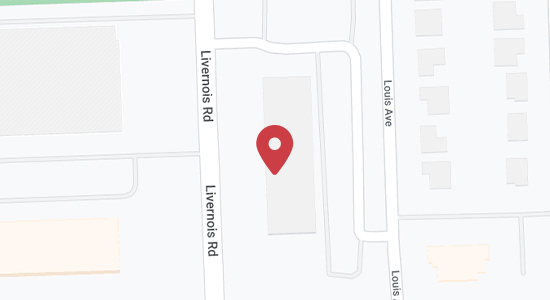
Yes, the firm is based in Troy, about 40 minutes from downtown Ann Arbor. Clients drive to us from across Michigan because what we do is exclusive to sex crimes. A CSAM defense is not a general criminal defense. It is not even a general sex crimes defense. It requires deep familiarity with forensic extraction reports, federal sentencing guidelines, state sentencing guidelines, Title IX procedures, immigration consequences, sex offender registry rules, and how state and federal prosecutors actually approach charging these cases. That is what this firm was built to do.
Call Blank Law, PC
If you, your son, your daughter, your spouse, your sibling, or your friend is being investigated for a CSAM offense in Ann Arbor or anywhere in Washtenaw County, whether or not the University of Michigan is in the picture, contact us before you do anything else.
Blank Law, PC
(248) 515-6583
Free consultation. Confidential. Available 24 hours a day.
We are here to help. That is all we do.
This page is for general information only. It is not legal advice, and reading it does not create an attorney-client relationship between you and Blank Law, PC. Every case turns on its specific facts. The interaction between criminal prosecution, Title IX administrative proceedings, and immigration consequences changes frequently. If you have been contacted by law enforcement or by a university investigator, the only reliable next step is to speak with a defense lawyer about your specific situation.
Blank Law, PC | 3150 Livernois Road, Suite 126, Troy, MI 48083 | (248) 515-6583 | nicoleblankbecker.com